www.amroll.com         Search on Site:                                    ISO 9001 : 2008

ENGINEERING POLICY

Over the years, it has been AMERICAN'S policy to offer engineering assistance to its customers. During our many years of experience in the application and manufacture of anti-friction bearings, we have learned that much can be done to aid our customer in bearing selection for his application.

American always has and always will provide engineering assistance to its customers. We can offer good advice regarding the selection and use of our bearings for both new and existing applications. Typically we do the following:

Load Ratings: Calculations made according to ABMA and ISO formulas for Dynamic and Static ratings.

Tolerances:    All parameters follow ABMA Class 1 and ISO Normal values, except for Inch-Series Tapered Roller Bearings, which follow Timken Class 2 and Class 4. Metric Tapered Roller Bearings follow ISO Normal values.

Clearances: All “N” prefix Cylindrical Roller bearings, Metric four-row Cylindrical (Multirow), Deep Groove Ball and Angular Contact follow ISO established clearance values for each type. Domestic Metric and Inch Cylindrical Roller bearings follow ABMA  Suffix B values.

Shaft and Housing Fits: We recommend that all users follow the identical guidelines established by both ABMA and ISO. These are in table format and depend on the bearing type, bearing size,  magnitude of the load, and which bearing component rotates. We will be glad to assist users in this selection process.

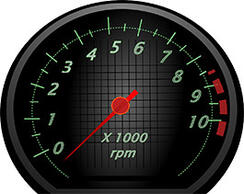
Speed Limits: These can be supplied for all bearings that we manufacture, and these limits should be more accurately called “Thermal Basis Speed Limits” as any speed over the “limit” for the  lubricant type, grease or oil, will result in too high an operating temperature for the lubricant to remain stable. These limits have been established by experience by observing many running applications, and should be considered a warning should a  bearing be operated within 90% of the stated limit. This is  because the ability of the application to remove heat from the bearing will allow it to reach thermal equilibrium at a safe level. Bearings that operate at speeds higher than their static oil speed limit and/or are in environments that does not remove bearing
generated heat, need a circulating oil system to control  temperature and lubricant breakdown. When this is provided in the application, a Stress Speed Limit needs to be calculated so the high speed does not allow the bearings cage to fail due to centrifugal force.

For your present or proposed bearing applications, please feel free to call our Engineering Department.